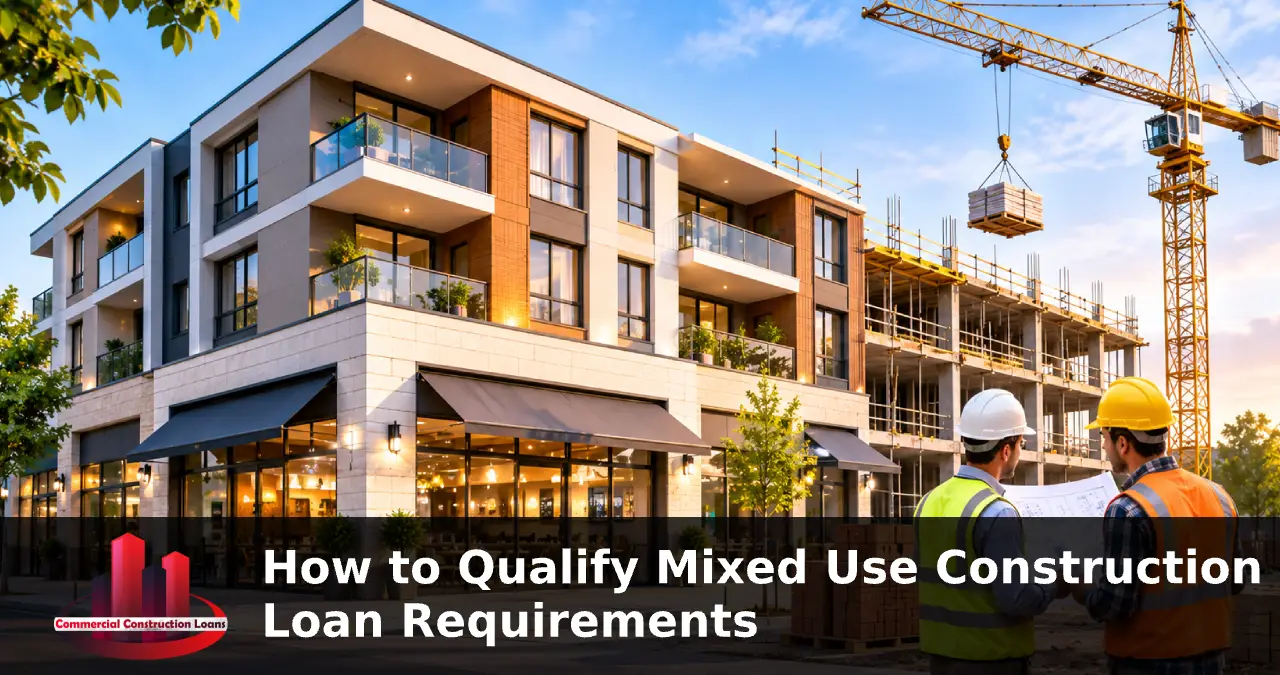
Quick answer: A mixed use construction loan pays to build a place with homes and shops. Most banks want 20% to 35% equity. They lend 65% to 75% of cost. Many want 30% to 60% of the shop space pre-leased. Private lenders can fund faster and lend more.
You have a site. You have plans. Now you need the cash. Banks often say no to mixed use deals. Not because the deal is bad. Because the file is not ready.
This guide shows what lenders check, which loan fits, and what to fix before you apply. Want a quick read on your deal? Send us your project and a loan officer will reply fast.
What Is a Mixed Use Construction Loan?
It is a short loan that pays to build a place with more than one use. Most often, that means homes above shops, offices, or a café. The Minneapolis Fed explains the term in plain words.
The loan pays for land, materials, labor, and permits. You do not get all the cash at once. The lender sends it in steps, called draws. An inspector checks the work first.
You pay interest only on the cash you have used. When the build is done and rented, you refinance or sell.
Why Is Mixed Use Different?
Two kinds of leases sit in one building. Home leases run about a year. Shop leases often run 5 to 10 years.
Lenders must trust both kinds of rent. So they study your lease plan and your exit. If one side looks weak, the loan stalls.
The upside is real. If a shop goes dark, rent from the homes still pays the bills. That is why many investors like these deals.
What Do Lenders Ask For?
Lenders want proof that you and the project are strong. Here is what most ask for.
| Item | What lenders often want |
| Your equity | 20% to 35% of total cost (cash or land value) |
| Loan to cost (LTC) | 65% to 75% at banks, up to 80% at some private lenders |
| Pre-leasing | 30% to 60% of retail or office space |
| Net worth | Close to the loan amount |
| Cash reserves | 6 to 12 months of debt payments |
| Track record | Past builds, or a pro builder on your team |
These are common ranges, not set rules. Each lender picks its own. Want to see how LTC shapes your budget? Read our guide on commercial construction loan LTC limits. Need more leverage? See if a max loan to cost construction lender fits your deal.
How Much Shop Space Can You Build?
This is where many deals break. Each loan has a cap on shop space. Cross it and the loan is out.
Here is how the main options compare.
| Loan path | Commercial space limit | Good to know |
| HUD / FHA 221(d)(4) | Up to 25% of rentable space and 15% of income | The income cap is 30% in some urban zones. Closing often takes 6 to 12 months. |
| Bank construction loan | Set by the bank | Often needs pre-leasing. Rates often float. |
| SBA 504 | Your firm must fill 60% of a new building | Made for owner users. Poor fit for homes. |
| Private lender | Flexible | Looks at value and site. Can fund in 7 to 21 days. |
| Fannie Mae exit loan | Shop income counts up to 20% | Often used to refinance after you build. |
HUD and Fannie Mae rules change. Always check with a lender. You can read the basics at HUD’s multifamily office and in Fannie Mae’s multifamily guide.
Plan your exit first. Your lender will ask how you will repay. The exit lender has its own shop caps. If your shop share is too high, the exit loan shrinks. That can leave a gap.
Can You Use an SBA Loan?
Sometimes. The SBA 504 program is made for firms that own and use their space. For a new build, your firm must fill at least 60% of it. Many deals need just 10% down.
There is a catch. The SBA limits passive rent. A building of mostly homes is a poor fit. A building of mostly your own firm, with a few tenants, may work. Not sure? Ask our team before you plan around it.
Why Do Banks Say No?
Most denials come from a short list.
- No pre-leases. The bank fears empty shops.
- Thin equity. You put in less than the bank needs.
- Weak budget. Costs are not listed line by line.
- Thin record. You have few past builds.
- No exit. No plan to refinance or sell.
- Zoning gaps. Permits do not match the plan.
The good news? You can fix most of these before you apply. A loan officer can spot them in one call. Our FAQ page answers common questions.
When Should You Use a Private Lender?
Pick a private lender when time is short or a bank says no. They look hard at the value of the site. They care less about tax returns.
Funding can take just 7 to 21 days with a full file. That speed helps you win land deals. It also helps if a build stalls. See how a private lender for mid-build projects can restart work. Also learn about non bank commercial builder loans.
A private loan is often short. Plan how you will refinance. A bridge loan is one tool for that gap.
One Loan or Two?
One loan can cover the build and the long-term debt. Lenders call it a construction-to-permanent loan. It closes once, so you pay one set of fees. It turns into a long loan when you finish.
Two loans mean two closings. You pay fees twice. But you get more choice at the end. You can shop for the best rate once the building is full.
Want low cost? Pick one loan. Want choice? Pick two.
Mixed Use or Apartments Only?
An apartment-only loan is often easier to get. The lender has just one kind of rent to judge.
But you give up the shop rent. Mixed use takes more work up front. It can pay more over time. Weigh both.
What Other Costs Should You Plan For?
New builders often forget these.
- Interest reserve. Cash set aside to pay interest while you build.
- Extra cushion. Money for cost jumps. Lenders expect it.
- Reports. Value, land, and plan checks.
- Closing fees. They add up fast.
- Fill-up time. Shops can take months to rent.
Put these in your budget now. Lenders like a careful plan.
Your Mixed Use Loan Application Checklist
A clean file can save weeks. Gather these first.
- Plans and permits. Final drawings and zoning approval.
- Cost list. A line-by-line budget.
- Build plan. Key dates and draw times.
- Your resume and money report. Show past builds and net worth.
- Reports. A land check and a value report.
- Leases or letters of intent. Signed deals with shop tenants.
- Company papers. Your LLC files and tax ID.
Is Mixed Use Still a Smart Bet?
Demand for walkable places is real. Harvard’s Joint Center for Housing Studies has long tracked how older adults want homes near shops and care. Many young workers want the same.
But the market is not wild. Census data show U.S. building spend in June 2026 ran about 3% below a year ago. Lenders are picky. A strong file matters more.
Slower building can mean fewer new rivals. A good site with good leases can stand out.
How Can Commercial Construction Loans Help?
We help builders and investors across the U.S. We have 30+ years of know-how and work with 200+ lenders. We can fund loans up to $100M. That spans bridge, hard money, SBA, FHA, and agency loans.
See each program on our loan products page. Want to know who we are? Visit our about us page. Or go to our home page.
Are you a broker? Ask about our referral programs.
FAQs
What credit score do I need for a mixed use construction loan?
It depends on the lender. Banks often want strong credit. Private lenders weigh the site and your plan more. Share your file and we will find the right fit.
How much down payment do I need?
Most lenders ask for 20% to 35% of total cost. You can often count land you own. SBA 504 loans can start near 10% for owner users.
How long does approval take?
It varies. HUD loans can take 6 to 12 months. Banks often take a few months. Private lenders can move in 7 to 21 days.
Do I need signed leases before I apply?
Not always. Many lenders want 30% to 60% of shop space pre-leased. Signed letters of intent can help. Private lenders may bend more.
Can I get a loan with little building experience?
Yes, in some cases. A strong builder, a good budget, and extra equity can offset a short record. Tell us about your team.
Ready to Fund Your Mixed Use Build?
Do not let a weak file cost you a good site. Tell us about your project. We will map the best loan path
Comments are closed