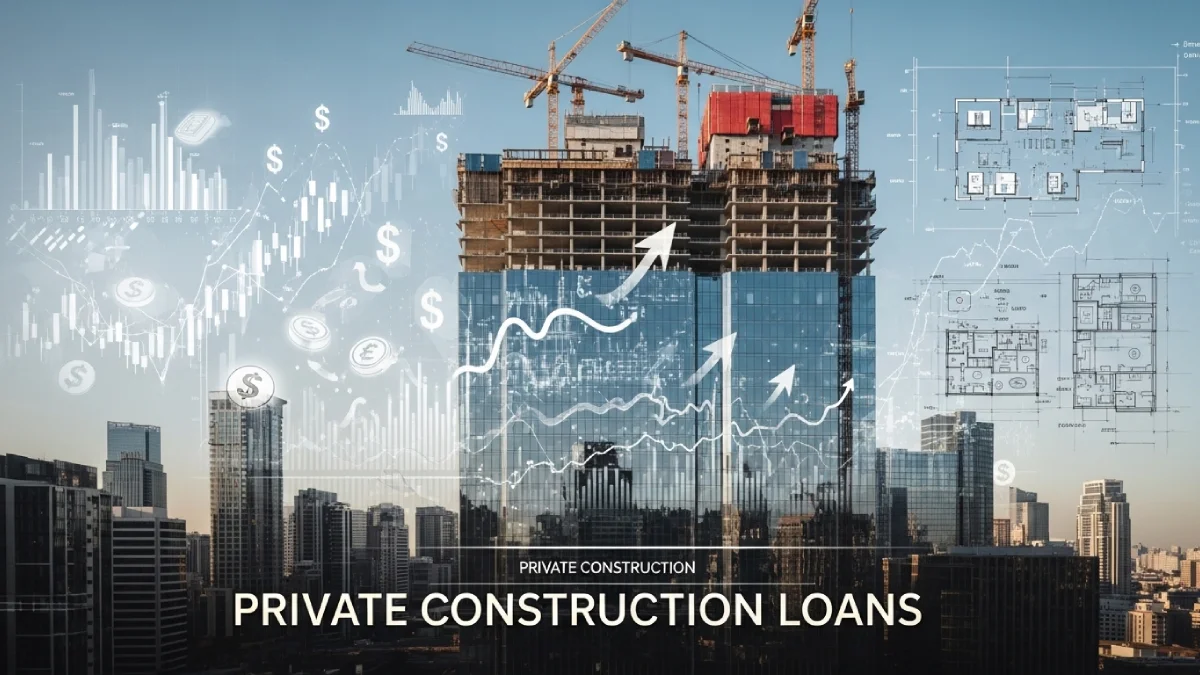
The commercial real estate market in 2026 is witnessing a historic transformation. On one side, we see a surplus of underutilized office space; on the other, a massive shortage of urban housing. This imbalance has created a unique window for investors. As national office vacancy rates hover near 20.0%, older Class B and C properties are facing a “liquidity trap” where traditional banks are hesitant to lend. With roughly $213 billion in office loans set to mature by the end of 2026, the need for creative financing has never been higher.
At CommercialConstructionLoans.Net, we bring 30 years of underwriting abilities as a correspondent and table lender. We understand that repurposing a commercial tower into a residential community is complex. Standard mortgage products often fall short. By connecting our platform of 200 private lenders and investors with brokers and realtors, we provide the speed and leverage that traditional banks can’t.
This blog examines the five core benefits of using private construction loans for office-to-residential conversion and why they are the preferred choice for savvy developers in 2026.
Is Your Office Building Actually a Liability in Disguise?
The 2026 landscape is defined by “Metropolitan Metamorphosis.” According to market analytics, the pipeline for converted apartments has hit a record 90,300 units, a 28% increase from just a year ago. Office valuations in major cities have dropped by 40% to 60% compared to 2019 levels. This reset makes residential reuse the most viable “higher and better use” for these assets.
| Market Indicator | 2024 Statistic | 2026 Reality/Forecast |
| National Office Vacancy Rate | 18.6% | 20.0% |
| Office-to-Residential Pipeline | 70,600 units | 90,300 units |
| Maturing Office Debt (Year-End) | N/A | $213 Billion |
| Adaptive Reuse Segment Share | 38% | 47% |
As institutional lenders pull back, lowering loan-to-value (LTV) ratios to 55%, the private market is stepping up. Private lenders provide the high-leverage debt needed to cover structural renovations. These loans are built to handle the entire lifecycle, from the initial acquisition bridge to the final transition into permanent debt.
1. Speed of Execution: Beating the Bureaucratic Clock
In 2026, labor costs and material prices fluctuate weekly. A 90-day delay in bank approval can ruin your project’s profitability. Private construction financing for adaptive reuse office buildings is designed for speed. While a traditional bank might take months, specialized private lenders can often close in as little as 14 business days.
Skipping the Committee Red Tape
Traditional banks rely on rigid committee reviews and standardized protocols. They often focus on personal income, which doesn’t help when a building is being gutted for a new use. Private lenders focus on the project’s feasibility and your track record. This allows you to secure “shovel-ready” assets before your competitors even finish their application.
When learning how to qualify
If you’re looking for a private office for an apartment conversion loan, you’ll find that speed is your biggest advantage. In fast-moving markets like Boston or New York, closing quickly can lead to purchase price discounts of $25,000 or more. This often covers the higher interest rate of private debt.
Real-Time Cash Flow
A private loan uses a flexible draw schedule. Traditional banks may take two weeks to release funds after a milestone. Private lenders often verify progress and release capital within 48 hours. This is vital for keeping your contractors on-site. In 2026, if you can’t pay your crew on time, they will simply move to another project, causing months of delays.
2. High Leverage: Preserving Your Precious Capital
The barrier to entry for office conversions is the high cost of retrofitting. In 2026, traditional lenders are conservative, requiring equity of 35% to 45% from the borrower. Private lenders for office-to-apartment conversion projects offer a better path by providing up to 80% Loan-to-Cost (LTC).
Why LTC Beats LTV for Conversions
There is a huge difference between Loan-to-Value (LTV) and Loan-to-Cost (LTC). LTV focuses on what the underperforming office building is worth right now. LTC focuses on the total project cost purchase price, hard construction costs, and soft costs such as architectural fees.
Lending against the total project cost lets you keep your liquidity. For example, a developer with $10 million in equity might only finance one project with a bank. With an 80% LTC private loan, that same money can cover multiple projects, spreading your risk and growing your portfolio faster. Private debt funds office to residential conversion view your “skin in the game” as a commitment to the project’s final value, not just a percentage of the purchase price.
Strategic Layering with Mezzanine Debt
Our platform goes beyond senior debt. In 2026, large conversions use a “capital stack.” Private equity funding for office to residential redevelopment often includes mezzanine loans or preferred equity. Mezzanine loans are popular because they allow higher leverage while providing a safety net for the lender.
| Capital Stack Component | Typical Leverage Position | Purpose in Conversion |
| Senior Construction Loan | 1st Lien (up to 70% LTC) | Hard costs, site acquisition |
| Mezzanine Debt | 2nd Lien (up to 85% LTC) | Gap funding, equity replacement |
| Preferred Equity | Subordinate to Debt | Strategic partner capital |
| Common Equity | Bottom of Stack | Sponsor/Developer funds |
3. Physical Flexibility: Solving the “Bones” Problem
No two office buildings are the same. Their suitability for residential use depends on physical traits that standard banks don’t always understand. Private financing provides the flexibility needed for structural changes, such as core-to-glass depth and utility retrofits.
Dealing with Deep Floor Plates
A major challenge in office-to-apartment conversions is the building’s depth. Many 1970s towers have deep floor plates. Residential codes require that every bedroom have a window and access to natural light. If the distance from the core to the glass is over 70 feet, you should carve out light wells or atria. This adds $50 to $100 per square foot in costs.
Traditional lenders see these as high-risk variables. Private lenders, especially those with 30 years of underwriting experience, see them as engineering tasks with a price tag. The requirements for private office to residential conversion loans include a detailed “gross-to-net” analysis to ensure the project stays profitable even after losing space for light.
Modernizing Invisible Infrastructure
Office buildings use centralized HVAC and plumbing. Converting these for 20 individual kitchens and bathrooms per floor is a massive task. Hard money loans for office to residential development provide the upfront capital for these “invisible” costs, which can be 30% of your budget.
4. Are Traditional Banks Intentionally Sabotaging Your Project?
Traditional banks offer a “one-size-fits-all” approach. If your project doesn’t fit their box, they say no. CommercialConstructionLoans.Net offers 75 varieties of loan types. This diversity is critical because your needs change as the project moves along.
The Construction-to-Permanent Path
The most efficient tool in 2026 is the construction-to-permanent loan. You secure one loan to cover the build, with interest-only payments. Once the building reaches a set occupancy, it automatically converts to a long-term mortgage. This saves you from “double closing” costs and the risk that long-term rates might rise while you build.
For multifamily projects, these are often underwritten to “Agency-qualifying” standards, making it easy to exit into Fannie Mae or Freddie Mac debt later.
Specialized Financing Tools
Depending on your project, you can use several niche products:
- DSCR Loans: These focus on the property’s rent potential rather than your personal tax returns, perfect for “lite-doc” borrowers.
- SBA 504 and 7(a): If your conversion includes a ground-floor restaurant or your own office, SBA loans offer low-interest, long-term funding.
- USDA B&I Loans: For office conversions in rural or suburban areas, these guarantees can lower your cost of capital.
- FHA Commercial Loans: These offer the highest leverage and longest repayment periods for affordable housing projects.
5. Can You Really Scale to 5 Projects While Your Competitors Wait?
One of the biggest benefits of private construction loans for office to residential conversion is “incentive layering.” In 2026, the nominal rate of a private loan (typically 8% to 14%) can be offset by federal, state, and local incentives.
The NYC 467-m and Regional Wins
In New York, the 467-m property tax exemption is driving a wave of conversions. It provides a 100% tax exemption during construction and up to 30 years of benefits afterward, as long as 25% of units are affordable. Similar programs exist in Boston, including the Downtown Conversion Pilot, which offers a 75% tax abatement for 29 years.
Historic and Green Credits
Many old office buildings qualify for Federal Historic Tax Credits (HTC), giving you a 20% credit on rehab expenses. Additionally, C-PACE (Commercial Property Assessed Clean Energy) allows you to finance up to 30% of your capital stack at low rates for energy-efficient upgrades.
When you pair a private construction loan with C-PACE and Historic Tax Credits, your ROI can skyrocket. Research from Yale and Oxford shows that “green” and historic buildings often command higher rents from younger tenants who value sustainability.
Why the 14-Day Closing Period is the Only Metric That Matters Now?
Securing the best private construction loans for commercial to residential requires a professional package. Our underwriting team looks for key indicators of success in 2026.
Your Financial Profile
Private lenders are flexible but want to see stability:
- Credit Score: A score of 680+ is standard, but some programs accept 600 if the equity and experience are strong.
- Debt Service Coverage Ratio (DSCR): Lenders look for a projected DSCR of 1.25x at stabilization.
- Equity and Contingency: You’ll likely need 20% to 35% equity and a 5% to 10% hard-cost contingency buffer.
The Underwriter’s Checklist
A “lender-ready” package should include:
- A Proven Contractor: You need a partner with experience in adaptive reuse.
- Updated 2026 Costs: Don’t use 2024 data. Lenders need real-time proof that your budget is realistic.
- Core-to-Glass Data: Prove that the building meets residential lighting and ventilation requirements.
- A Clear Exit Strategy: How will you pay off the construction loan? (Sale or Refinance).
Institutional Insights: The Harvard, Yale, and Oxford View
The shift to residential reuse is a major topic at the world’s top universities. Their data helps private lenders build better underwriting models.
Harvard: Remodeling Trends
The Harvard Joint Center for Housing Studies (JCHS) notes that the remodeling sector is now a $522 billion industry. Their data suggests that while growth may slow slightly in late 2026, those who secure private financing early will be best positioned to capture lower material and labor costs.
Yale: Environmental ROI
Yale’s research highlights that converting an office tower saves 50% of the “embodied carbon” compared to building from scratch. Their case studies show that “diverse vertical villages” serve a range of income levels and are the most sustainable path for city growth.
Oxford: Global Resilience
The Oxford Real Estate Investment Program emphasizes that “picking markets, not sectors,” is the key to outperformance in 2026. Their research indicates that flexible buildings, those that can shift from office to residential, are the most resilient assets in a changing economy.
Technical Summary of Private vs. Traditional Financing
| Feature | Traditional Bank | Private Correspondent Lender |
| Speed to Close | 45 – 90 Days | 10 – 21 Days |
| Max Leverage | 60% – 65% LTV | Up to 80% LTC |
| Interest Rate | 6.5% – 8.5% | 8.0% – 14.0% |
| Documentation | Heavy/Full-Doc | Flexible/Lite-Doc |
| Underwriting | Credit/Personal Income | Asset/Project Viability |
Comparing Private vs Traditional Loans Office to Residential
The choice often comes down to cost vs. opportunity. While the cost of private construction loans office conversion might have a higher interest rate (8%-14%), the speed and leverage often save more money in the long run. By closing in 14 days instead of 60, you can often negotiate better purchase prices and avoid rising labor costs.
Traditional loans are great for stabilized assets, but they struggle with the “in-between” phase of construction. Private construction loan rates for office to residential are a reflection of the risk the lender takes on an empty, non-revenue-producing asset. Once the project is finished, you can easily refinance into the lower-rate permanent products we offer.
Conclusion: Securing Your Future in Urban Real Estate
The 2026 market offers a rare chance to transform the urban landscape. As the traditional office market faces a painful reset, the demand for residential housing is urgent. Private construction loans for office to residential conversion are the engine that makes this transition possible.
By partnering with CommercialConstructionLoans.Net, you gain 30 years of underwriting abilities and a direct gateway to a platform of 200 private lenders and investors. Whether you are dealing with deep floor plates, the 467-m tax exemption, or seeking a seamless construction-to-permanent structure, the benefits of private capital are clear.
In a world of high stakes and structural shifts, speed and flexibility are your greatest tools. Let us help you turn your next office asset into a thriving residential community. Contact us today to learn more about our 75 loan varieties and how we can support your project from the ground up to completion.
FAQs
Are these office conversion projects actually profitable?
Yes. Projects often become financially viable by 2027 as rents shift and government incentives kick in. Some historical adaptive reuse examples show a strong return of nearly two dollars for every single dollar invested.
Do conversions really save the environment?
Yes. Repurposing existing office towers saves roughly 50% of the embodied carbon compared to new construction. This strategy reduces waste, prevents urban sprawl, and helps developers meet strict 2026 environmental, social, and governance targets.
Can C-PACE help fund my conversion?
Yes. C-PACE provides flexible, long-term capital for energy-efficient upgrades, such as HVAC or plumbing, during redevelopment. It often carries lower rates than alternative capital, helping you lower the overall blended cost of your project’s financing.
Are deep floor plates a project killer?
No. While floor plates deeper than 70 feet require structural changes, developers can carve out interior atria or light wells to meet code. These modifications add costs but allow for innovative, high-demand residential layouts.
Will conversions solve the urban housing crisis?
Yes. With over 90,000 units currently in the national pipeline, office-to-residential projects are a primary tool for increasing urban density. They transform non-revenue assets into essential homes while revitalizing stagnant downtown business districts.
Comments are closed